Loading...
Searching...
No Matches
◆ random_array()
| std::vector< double > MayaFlux::Nodes::Generator::Stochastics::Random::random_array | ( | double | start, |
| double | end, | ||
| unsigned int | num_samples | ||
| ) |
Generates an array of stochastic values within a specified range.
- Parameters
-
start Lower bound of the range end Upper bound of the range num_samples Number of values to generate
- Returns
- Vector of values within the specified range
Generates a collection of values following the current distribution, mapped to the specified numerical range.
Definition at line 42 of file Stochastic.cpp.
43{
44 validate_range(start, end);
45 m_current_start = start;
46 m_current_end = end;
47
48 std::vector<double> samples;
49 samples.reserve(num_samples);
50
51 for (unsigned int i = 0; i < num_samples; ++i) {
53 }
54
55 return samples;
56}
void validate_range(double start, double end) const
Validates that the specified range is mathematically valid.
Definition Stochastic.cpp:98
double transform_sample(double sample, double start, double end) const
Transforms a raw value to fit within the specified range.
Definition Stochastic.cpp:87
double generate_distributed_sample()
Generates a raw value according to the current distribution.
Definition Stochastic.cpp:63
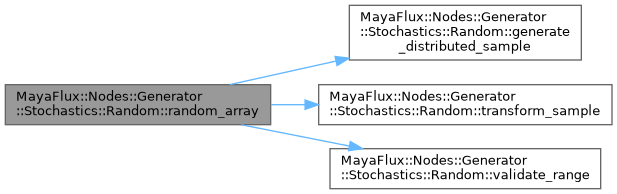
References generate_distributed_sample(), MayaFlux::Nodes::Generator::Generator::m_amplitude, m_current_end, m_current_start, transform_sample(), and validate_range().
Referenced by process_batch().
 Here is the call graph for this function:
 Here is the caller graph for this function: